
Manor Township Previous Resident Sources
Previous residents leave different kinds of evidence at different dates. For Manor Township, Lancaster County deeds follow recorded interests in land. The wEdge card supplies modern parcel and Site Address context. Historical directories and tax records can place a household or name in a locality, but their coverage is not continuous. County Archives and LancasterHistory provide the offline and archival routes when an online result ends. The table separates what each source can show from what it cannot establish alone.
| Source | Years It Covers | Where Held | What It Shows |
|---|---|---|---|
| Historical deed-name index | 1729 to 1981 | Lancaster Recorder and historical-index route | Recorded property-name leads and the deeper deed trail. |
| Recorder public search | 1981 forward | Lancaster County Recorder public portal and office | Newer grantor, grantee, instrument, and recording-date leads. |
| wEdge property records | Tax years 2005 to 2026 | Lancaster County property-search portal | Parcel, Site Address, displayed owner information, assessment context, and sales-history area. |
| Lancaster City & County Directories | 1843 to 1922, in three series | Power Library and LancasterHistory | Year-specific name, occupation, or address clues where the original volume supplies them. |
| Manor Township tax records | 1751 to 1846, discontinuous | LancasterHistory tax-record guide | Township-specific tax-year evidence and gaps that need careful reading. |
| County Archives | Government records from 1729 | County Government Center, Suite 10, and request channels | Historical indexes, maps, deeds, probate and other government material. |
Start with the source closest to the date of the question. A recent Manor Township transfer often starts with the parcel and Recorder. For an older Manor Township house history, a modern parcel can still be the anchor, but historical map, deed, tax, and directory clues must be reconciled before a past resident is assigned to the place.
Start a Manor Township Address Trail
Before tracing previous residents, confirm the current parcel rather than beginning with a surname. For a Manor Township property, use Lancaster County wEdge Property Search with a known street number and street name, then select municipality 410 Manor Twp. County guidance says to enter the street name without its suffix. Record the parcel ID, the exact Site Address, the Township selection, and the tax year displayed on the result.
A parcel card may show related names and an address associated with an owner. That information is a property-record lead, not proof that a person lived at the site. The record becomes more useful when its parcel identifier and Site Address are carried forward to the deed and map work. Assessment data can lag a recent change, so a date belongs with every observation.
The wEdge search establishes a present-day anchor. It should be paired with recorded documents before describing a prior owner, and with historical household sources before describing past residents.
Trace Manor Township Previous Resident Deeds
The Lancaster County Recorder public search leads to a recorded-instrument index after its disclaimer. For a Manor Township address, the Recorder identifies the index as a catalog-like starting point, and the County warns that data can change and name spelling can vary. A current instrument, its party roles, its recording date, its legal description, and any prior-reference language are the pieces that make a backward deed trail more dependable than a surname-only search.
- Use the confirmed wEdge parcel and Site Address to identify a current owner display and the time context for the property record.
- Search the Recorder by the likely party name, instrument, and date range. Compare the document’s legal description with the parcel rather than relying on the street number alone.
- Read the current transfer as a connection between a grantor and grantee. Look for prior-reference wording or other clues to the preceding recorded interest.
- Search the earlier party in the opposite role, then repeat the description, date, and map checks for each older instrument.
- When the trail reaches older material, use the historical-index and Archives routes with spelling variants, road clues, tract language, and the best available timeframe.
- Grantor
- The person or entity conveying a recorded land interest in an instrument.
- Grantee
- The person or entity receiving that recorded interest. Neither role proves day-to-day residence at the property.
- Chain of title
- A sequence of recorded transfers or interests connected by the same land description, not merely a list of matching names.
- Legal description
- The tract, plan, bounds, or other land wording in a document. It can identify a property when an older record lacks today’s street number.
Note: A deed recording date and the actual date a property changed hands can differ, so retain both when the instrument provides them.
Manor Township Previous Resident Deed History
Lancaster County says deeds were first recorded on May 10, 1729. Its genealogy and historical-index material describes a historical name-index route for 1729 to 1981 and newer deed searching from 1981 forward. That depth gives Manor Township previous-residents research an unusually long property trail, but it is not one seamless modern address database. Older entries can contain spelling differences and land descriptions that do not resemble the present street address.
The Recorder makes Manor Township records available online and in person. The County Archives adds historical-index reference help, while the Recorder office can supply document access channels for the recorded record. Use a narrow request when a copy, certified item, or an archival lookup is needed. The Archives asks for a collection reference where possible, or otherwise a name, timeframe, and record type, and does not conduct open-ended research.
The Recorder’s historical-deed and map paths are shown at the Lancaster County Historical Indexes source.
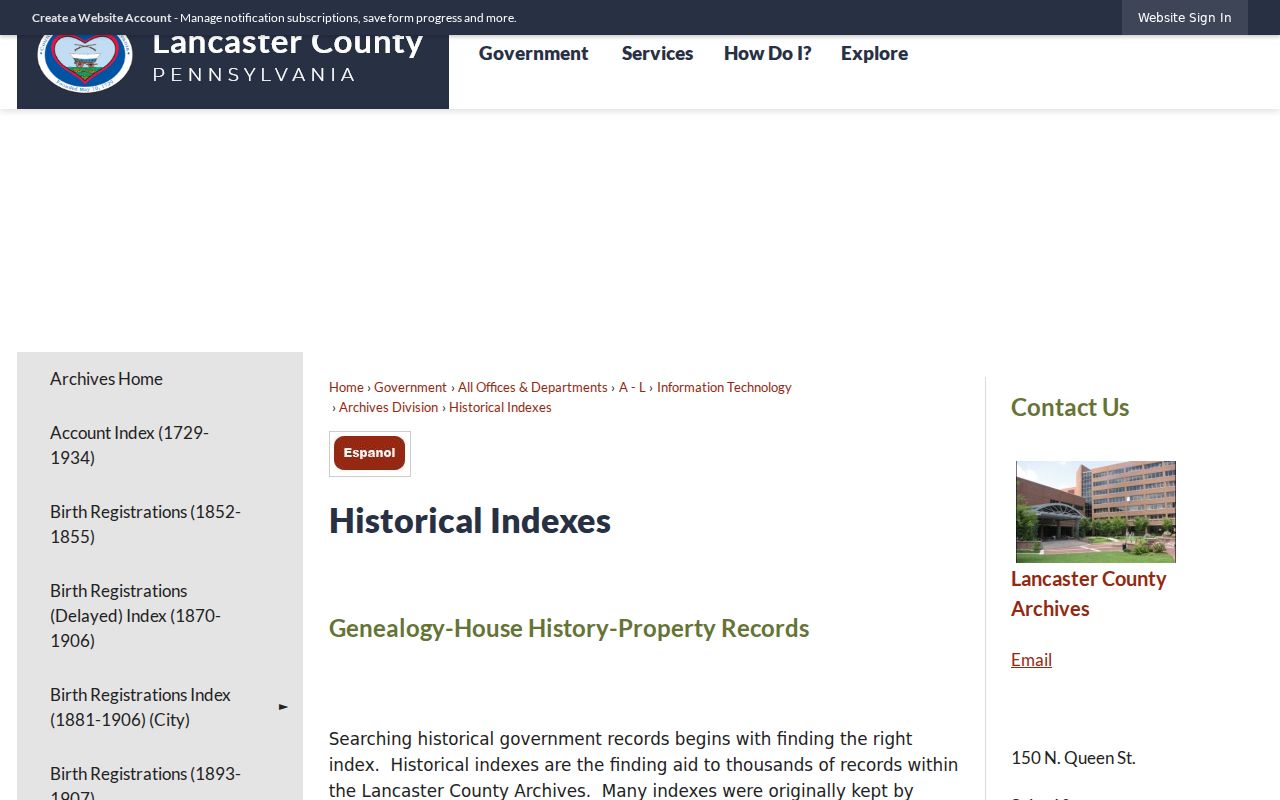
These County routes are especially useful when a current parcel is tied to an earlier tract instead of an already numbered street address.
Map Earlier Manor Township Resident Land
County Historical Indexes identifies warranty-map layers from eighteenth-century material through 1824, 1864, 1875, and 1899 over modern-address context. For Manor Township previous residents, begin with the modern parcel, select a map period close to the record date, note the label and map date, then seek a deed, tax entry, or collection reference that independently names the person. A map label is a lead, not a substitute for the underlying record.
This step matters because research found no authoritative Manor Township street-renumbering history, courthouse-fire loss, or formal street-grid history. An old Manor Township tract may have been divided, renamed, or described by bounds. Do not force an older name onto a current house number because it falls near the same place on a georeferenced image. Preserve the uncertainty until parcel, road, plan, or legal-description evidence resolves it.
Manor Township Previous Resident Tax Gaps
LancasterHistory’s tax-record guide provides a distinctive local path for previous residents. It lists Manor Township material for 1751, 1754, 1756 to 1759, 1763, 1765, 1769 to 1773, 1775, 1777, 1779 to 1783, 1785 to 1793, 1797 to 1803, 1805 to 1811, 1813 to 1816, 1818, 1820 to 1827, 1830, 1832 to 1836, 1839, 1841 to 1843, and 1845 to 1846, plus undated material.
The run is powerful because it is Manor-specific, but it is discontinuous. A missing year in the guide is not proof that a Manor Township household left the Township, and a tax entry may be a head-of-household or property entry rather than a daily residence record. Pair a tax date with a deed, map, probate index, directory page, or census clue when the question concerns who lived there before.
The LancasterHistory tax-record guide supplies the local year list and is the better source for planning an early search than a broad countywide claim.
Pair Manor Township Past Household Sources
Ownership is only one part of a Manor Township address history. The digitized Lancaster City & County Directories have documented runs from 1843 to 1900, 1901 to 1914, and 1914 to 1922. Read the original page image and record the exact spelling, page, year, and locality label. County-inclusive coverage makes the series a useful Manor Township lead, but Township inclusion can vary by volume.
- Choose the directory volume closest to the year being researched and capture the entry exactly as it appears on the original image.
- Compare the prior and next available volumes, keeping the publication years separate from a claim of continuous occupancy.
- Pair the directory clues with any census schedule, tax year, or deed date that fits the same household and locality.
- Test the address connection against the parcel, road, tract, or legal description before treating a postal place label as the same Manor Township location.
LancasterHistory holds maps, newspapers, church records, manuscripts, and government material, with archival research by appointment and a complimentary library-access description. The collections themselves are described in the Manor Township directory book; the point here is to place a dated household clue into one address trail.
Ask for Defined Manor Township Records
When a Manor Township online trail ends, the Lancaster County Archives holds government records from 1729 and historic indexes and maps. Requests can be made by email or mail. Supply a reference or collection when known; otherwise give the name, timeframe, and record type. The Archives can check indexes but does not take on an open-ended address-history search.
The stated request charge is $5 for up to 20 images or pages, plus postage, then $0.50 for each additional image or page, with electronic PDF output available. The Research Center at LancasterHistory is a separate route for local collections. Its staff asks for names, dates, and residence clues, and some research-service copying or scanning is described at $5 per document plus sales tax. Recheck charges and access conditions before ordering.
The County’s request and payment procedure is shown on the Archives request source.
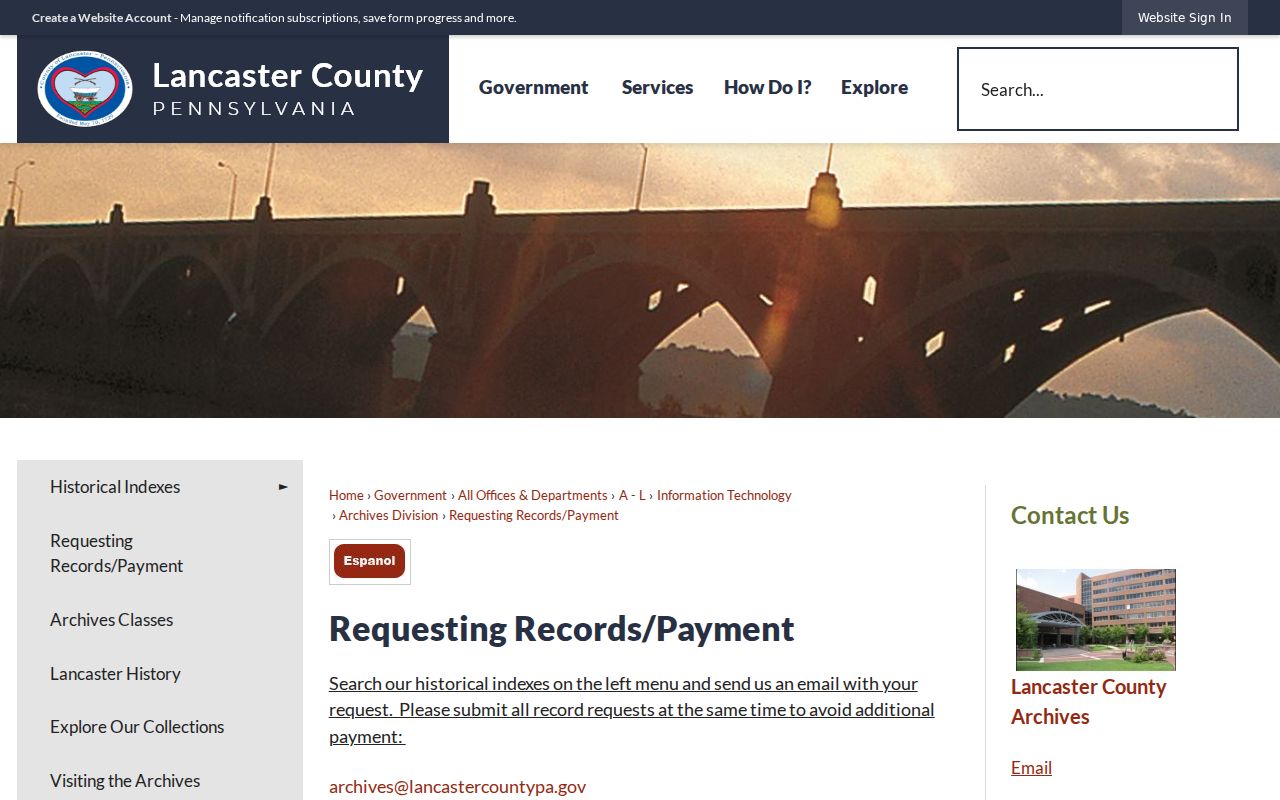
A defined request tied to a parcel, date range, and instrument or collection is more likely to produce a useful historical record than a general request for everyone who lived at an address.
Manor Township Previous Resident Research
LancasterHistory’s Roberts and Sally Roberts land-research finding aid contains Manor Township census lists, deeds, township notebooks, land records, a Manor Indian Town history, 1790 and 1800 census material, and an 1815 Manor Township Mill landowner lead. These are highly local leads for Manor Township family and house history. Ask staff for the specific box, folder, and access conditions rather than assuming every item is digitized or indexed by address.
Newspaper notices, estate records, wills, intestate material, and Orphans’ Court references can add dates, relationships, executor roles, or locality clues. They do not automatically establish that someone lived at the street address on a particular day. Use them to test the deed and directory trail, and leave a conflict visible when the sources disagree.
Use Manor Township History Lawfully
Manor Township previous-resident research is most useful for a property timeline, family history, estate or heir questions, and local-history curiosity. It works best as a dated sequence of document associations, not as a real-time tracking tool. The Pennsylvania Address Confidentiality Program protects eligible survivors through a substitute mailing address, and protected information should never be pursued or bypassed.
The Recorder’s free Fraud Notify service can alert an enrolled name when a matching recorded document appears. It does not certify title or prove that a filing is valid. For a suspected property-document scam, verify the document with the Recorder and use the official reporting route rather than relying on an alert alone.
The Recorder’s current document-copy and certification information is shown at the Lancaster Recorder fee-schedule source.
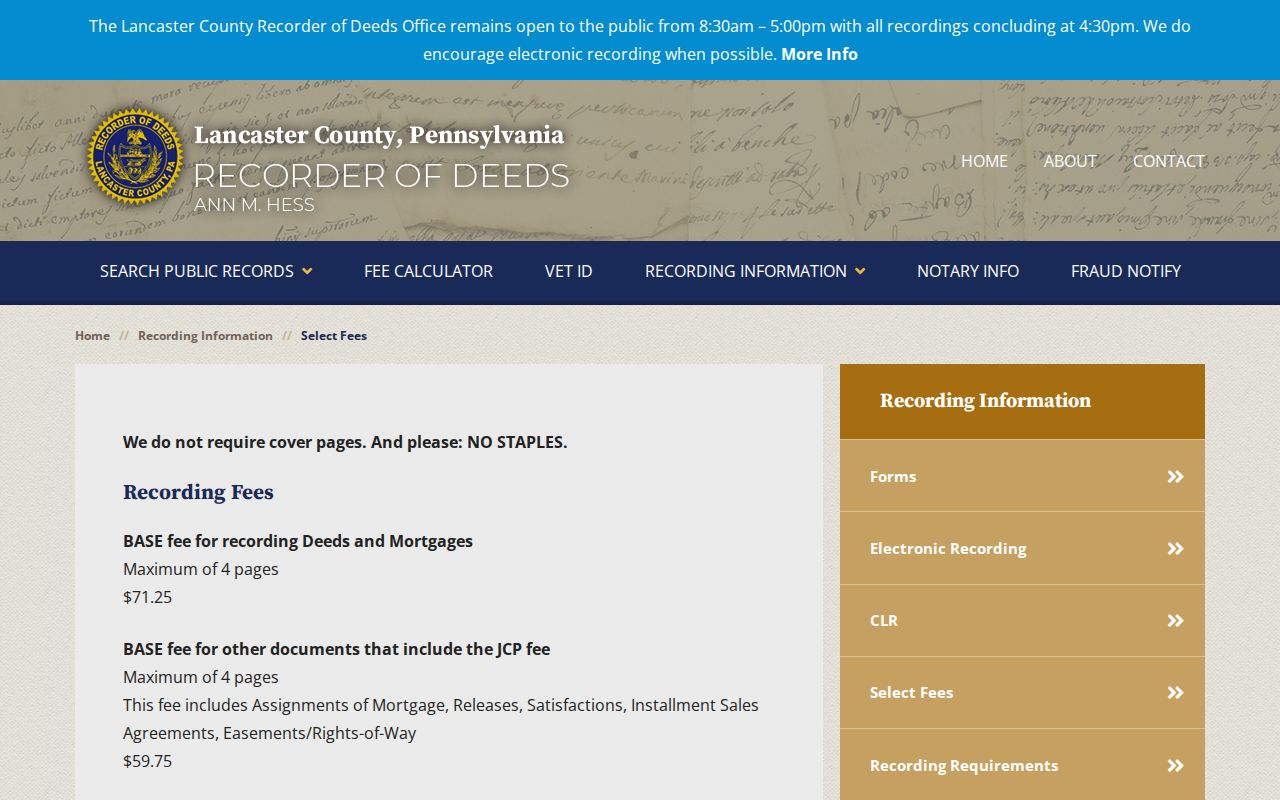
Current fee information helps plan a document request, but the recorded instrument itself remains the item that must be read and compared with the parcel.